Tra My Nguyen about her artistic practice and her debut film She Who Moves
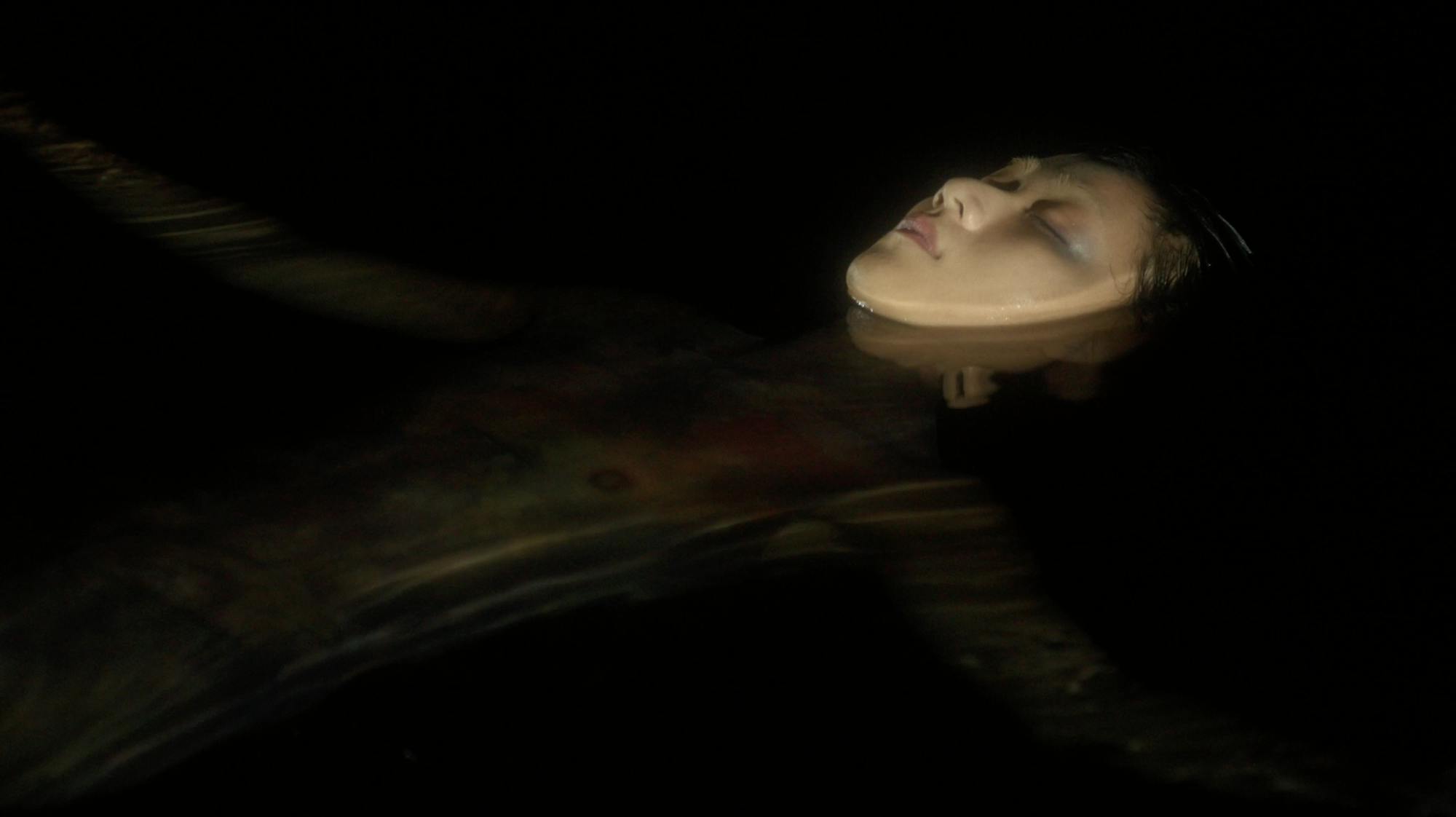
"At the center of my work, I use the body as a subject of inquiry—its socio-political entanglements, its cultural symbolism, and its agency."
Kemmler Foundation: Could you tell us about your artistic practice and how your background in fashion design led to your transition into a career in visual art?
Tra My Nguyen: I work with different mediums, mainly textiles, sculpture, and moving image. My practice explores diasporic experiences and perspectives in order to examine material culture within global systems. At the center of my work, I use the body as a subject of inquiry—its socio-political entanglements, its cultural symbolism, and its agency.
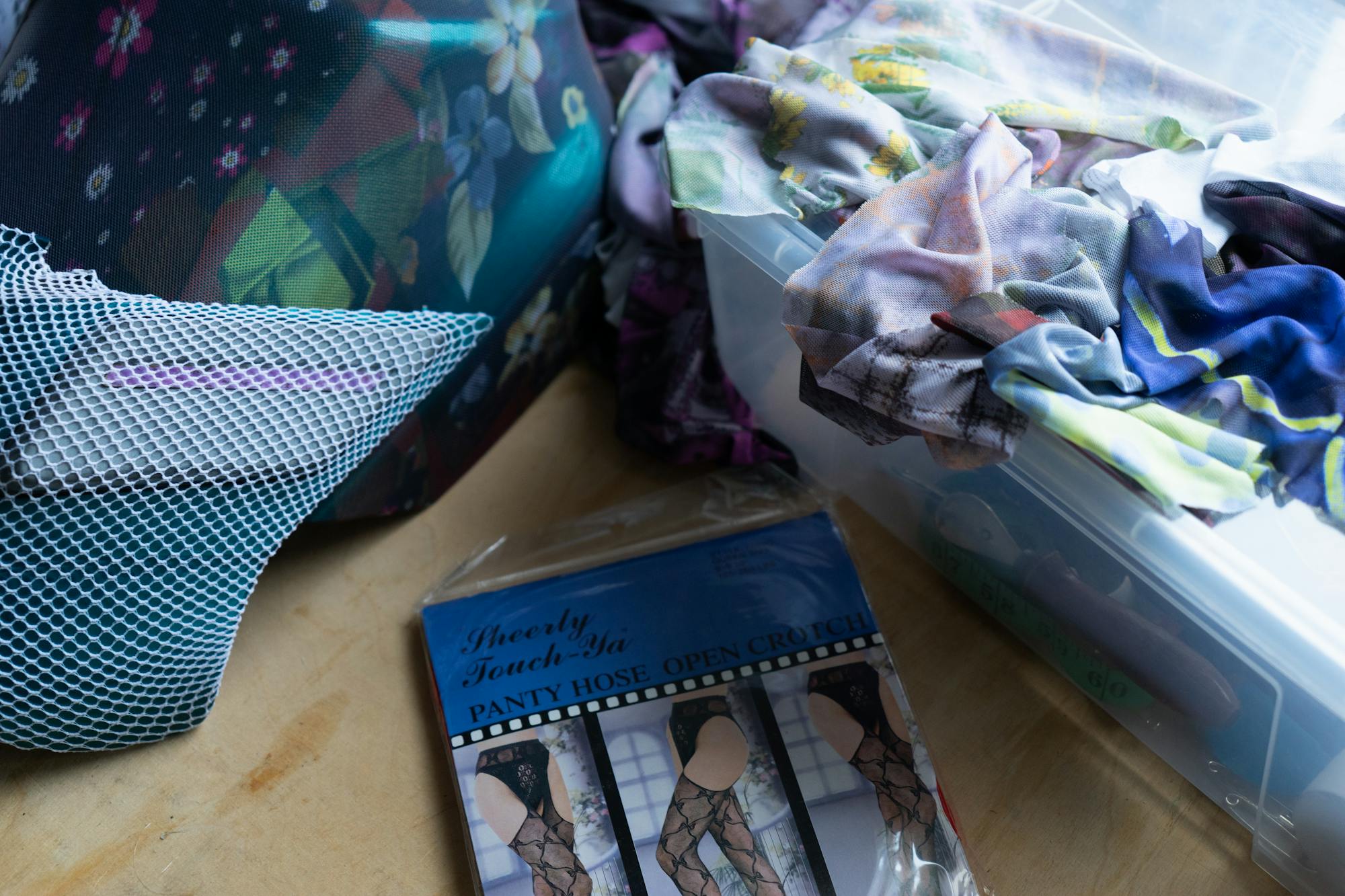
My background in fashion design influenced this a lot. I was always drawn to sculpture, or to seeing the body as a sculptural form. What interested me in fashion was how the body sits within a context, how materiality creates an atmosphere, and how design can shift the environment around it. During my Fashion Design MA, I created a video installation with various sculptural elements alongside a fashion collection—an early attempt to treat fashion as just one expressive medium among others.
In my current practice, I still work with the body and often use elements of fashion, such as textiles or clothing, as tools of inquiry. They help me explore themes like gender and transformation. I’ve always been fascinated by the intersection of these two worlds, but eventually I realized that fashion as an industry is fundamentally tied to the human body in a way that felt limiting. Visual arts gave me more freedom: I can explore the body while also working with objects, shapes, and broader cultural or communal contexts.
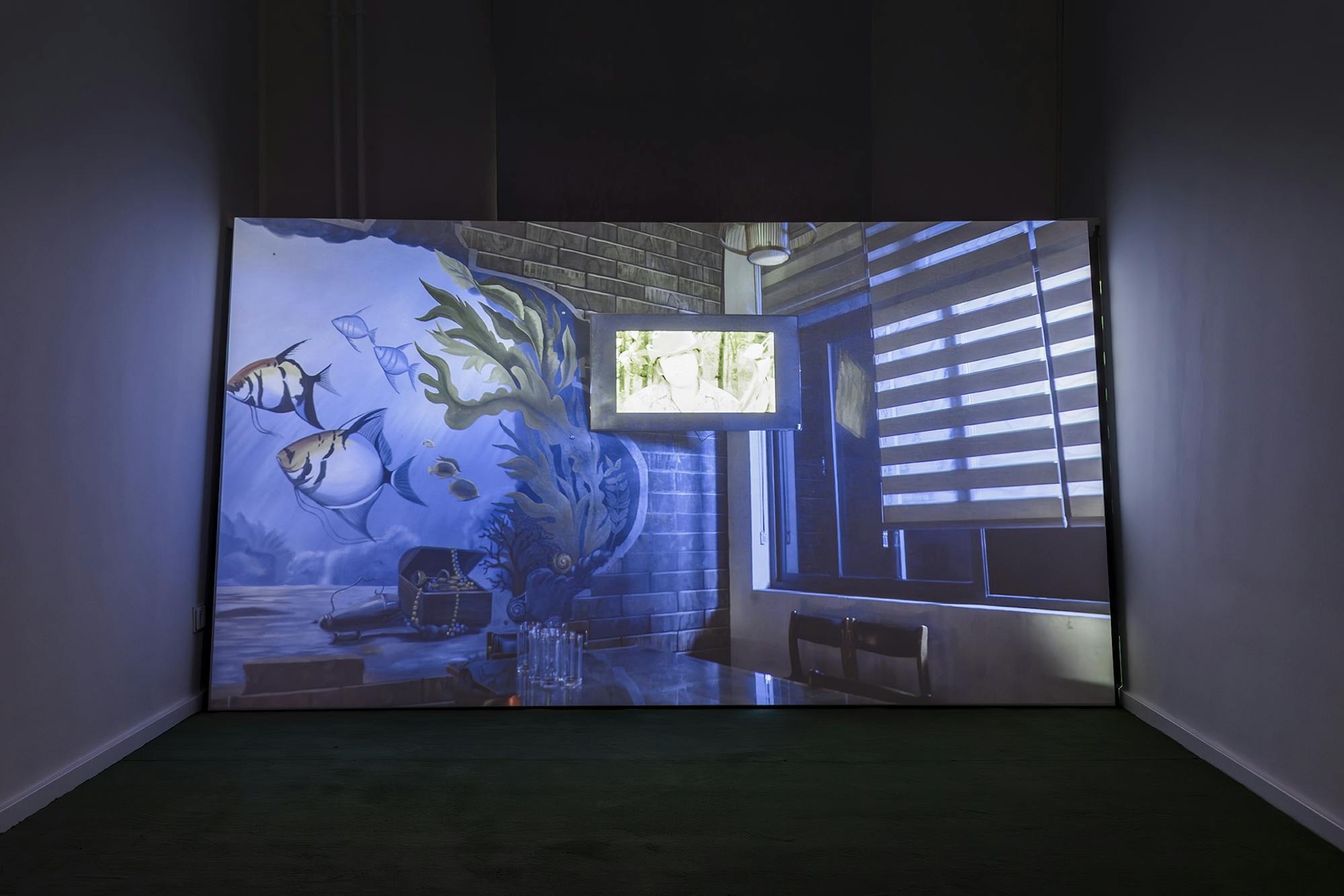
At the BPA// exhibition, you're presenting a new body of work. Could you tell us about the film you’re showing?
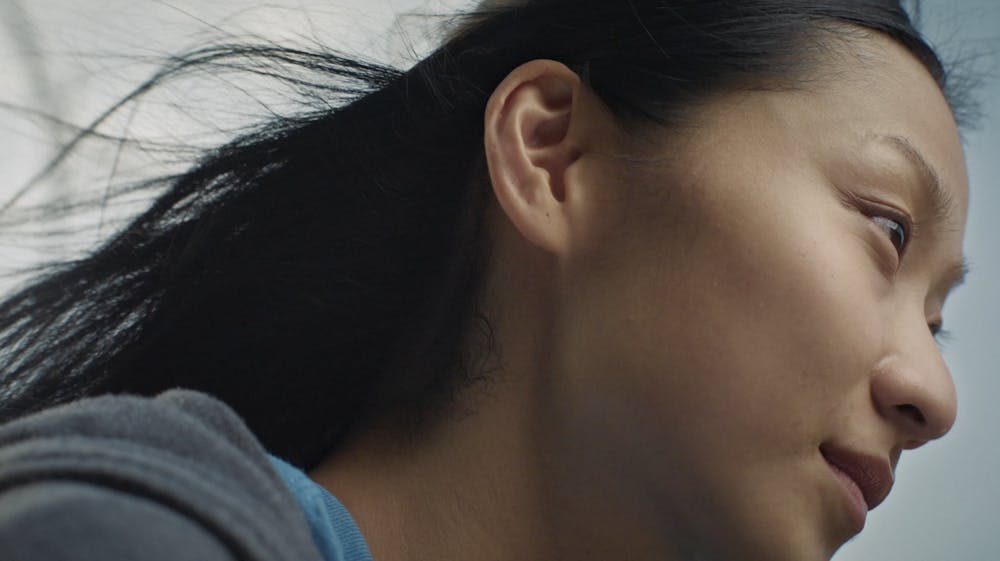
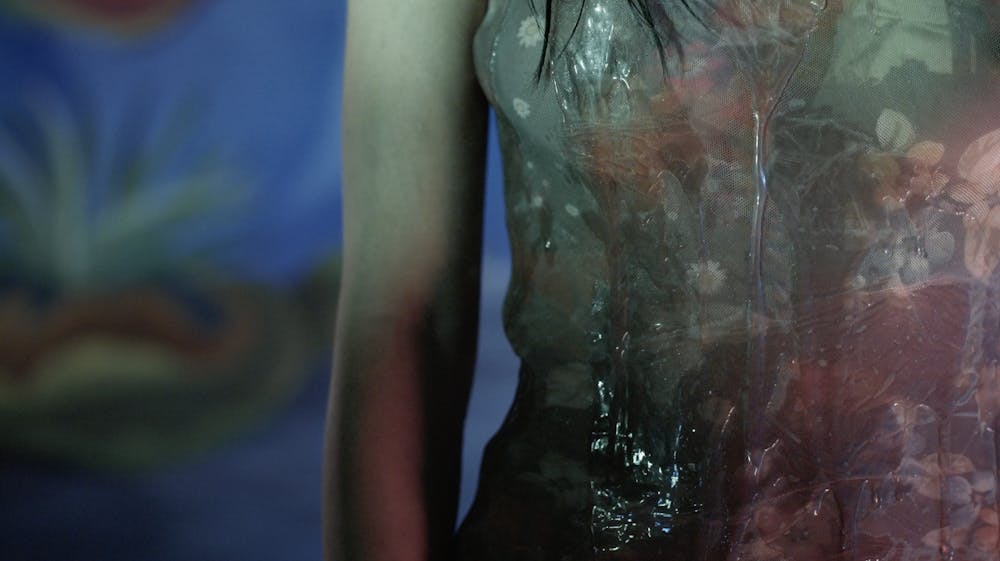
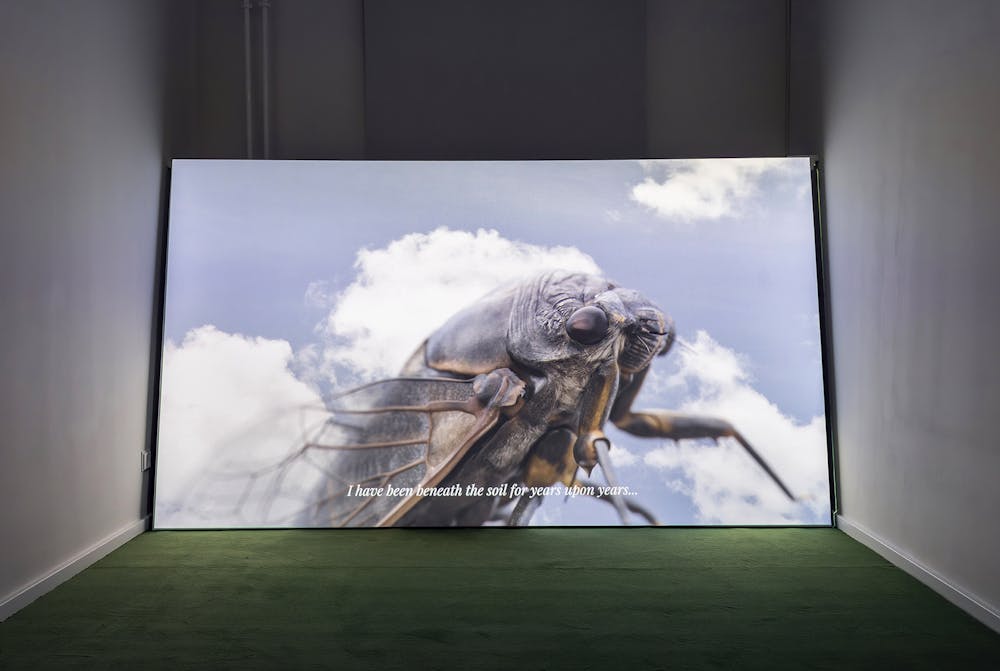
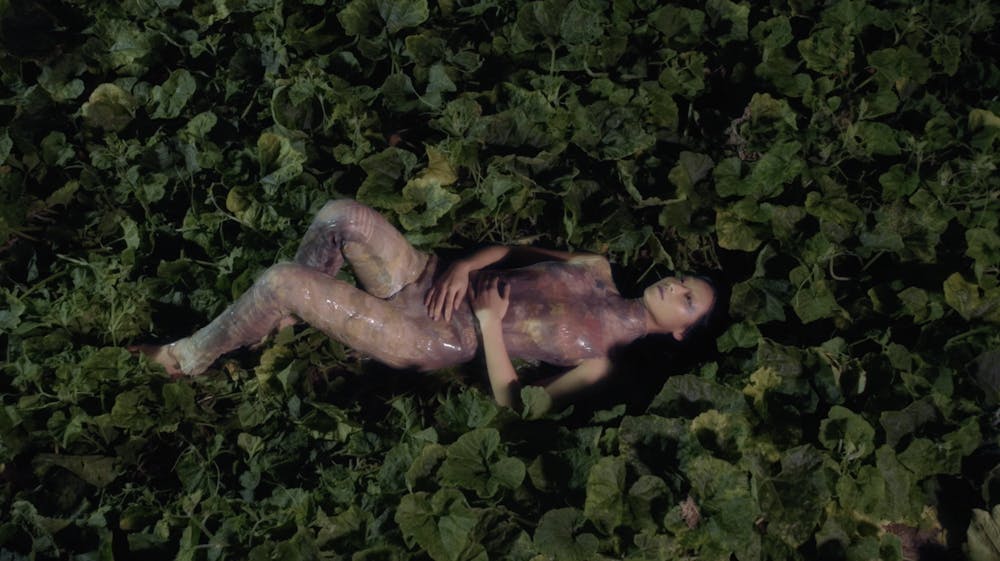
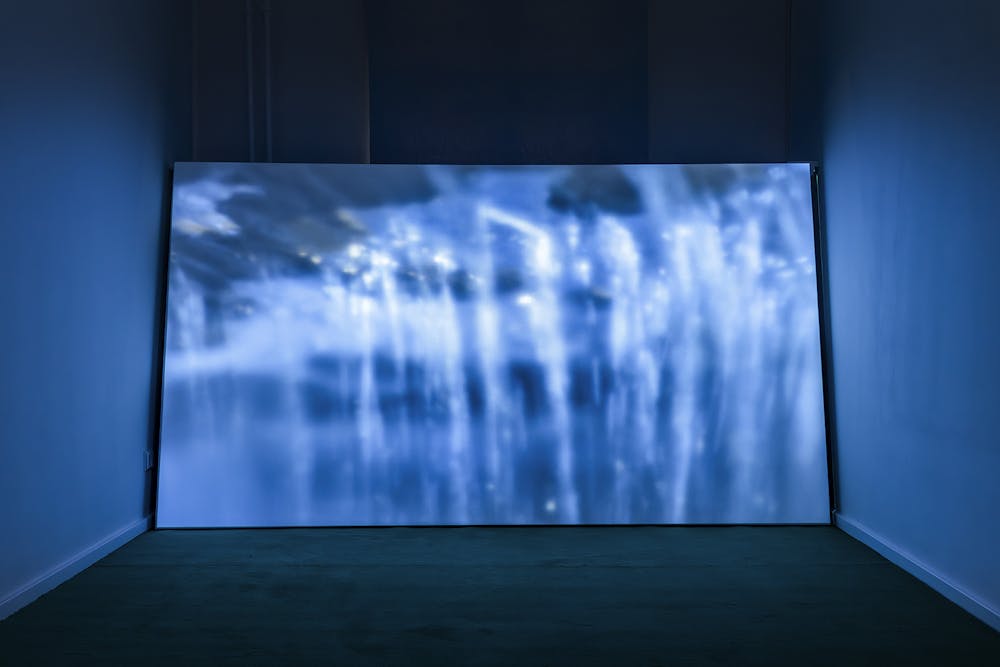
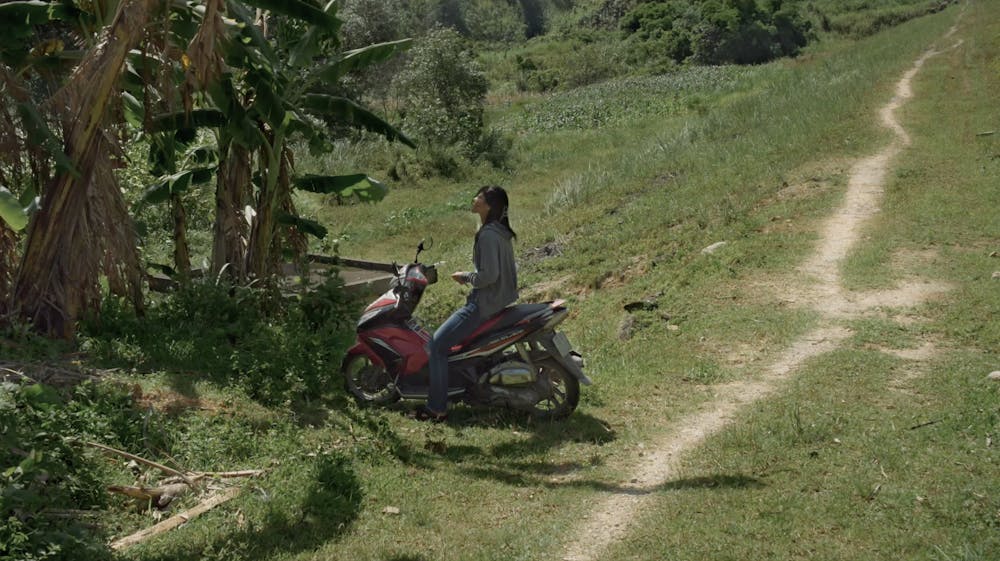
The film She Who Moves was filmed in Vietnam. We follow a protagonist on a motorbike in a solitary journey inspired by the road-movie-esque manner. She travels through various landscapes, and the film begins in a realistic tone but slowly becomes more mystical and fantastical.
At the center of the narrative, she discovers a silicone bodysuit that marks her metamorphosis. The journey is both physical and internal—an exploration of transformation. I collaborated with talented friends who created an atmospheric score to enhance this feeling of entering the unknown. We don’t know yet where she is heading, but we accompany her into this uncertainty.
This is your first time working with film. What was the experience like for you?
It was both challenging and exciting. I arrived in Vietnam with a script and ideas, but without much logistical planning. Very quickly, I learned that in Hanoi there are only a few people experienced in producing or shooting artistic films. I was lucky to find them, and they generously supported the project.
The shoot itself was intense: three days outdoors in 40-degree, humid summer weather. It was also my first time managing a team of that size. My producer was incredible, and the whole crew made the process possible.
I also realized how process-based filmmaking is—everything can change depending on the location or other unexpected conditions. You have to adapt constantly, and I actually enjoyed that. Those shifts ultimately made the film stronger than what I had originally envisioned.
You’re part of the BPA// program. Could you tell us more about the program and how it has supported your development as an artist?
BPA is a mentorship program for Berlin-based artists. It supports us through regular studio visits. Every two weeks we have one-on-one visits from invited mentors, followed by group studio visits where we visit an artist’s studio together as mentees. The ongoing feedback and conversations have been extremely valuable for my development.
It has supported me not only through the studio visits, but also through the network and its community of different artists, as well as through the co-directors of BPA//, Willem de Rooij, Simon Denny and Angela Bulloch. I’m very grateful for this experience. It’s not only something offered to us—we also bring something into the program. It allows for exchange on many levels, and I’ve formed new friendships and met amazing people, too.
At the Kemmler Foundation, we often ask artists and creators to contribute to a utopian project called the “Utopian Library”. It’s a library made up of books that have a utopian outlook of one kind or another. What books would you like to see in our Library of Utopias?
It’s not a traditional book, but a friend recently gifted me an original Sailor Moon manga from the ’90s. The details, the drawings, the colors…
There’s something incredible and genuinely utopian about it.
Kemmler Foundation provided support for Tra My Nguyen' s work "She Who Moves", which premiered in December 2025 at KW Institute for Contemporary Art, Berlin.