Leila Hekmat on the Commedia dell'Arte inspired performance that premiered at Berlin's HAU.
"A multifaceted spectacle that draws from tropes of musical theater"
Kemmler Foundation: Gloriette is set in a slowly sinking department store in Venice. Where did the idea come from?
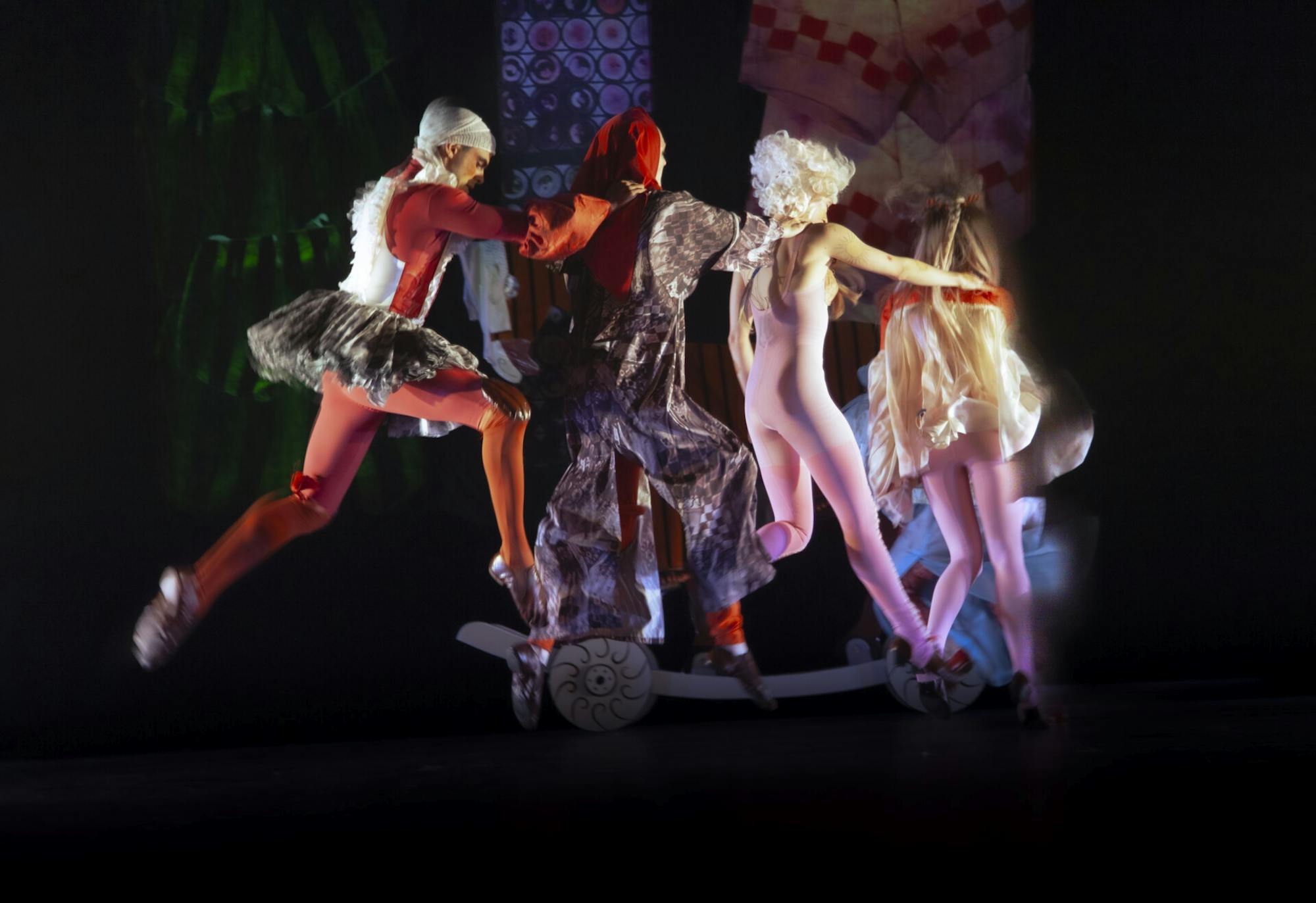
Leila Hekmat: The idea for Gloriette has been developing over the course of many years. I would maybe even say it's still developing. I have always wanted to create a Gesamtkunstwerk like Mike Kelley's Day is Done, a multifaceted spectacle that draws from tropes of musical theater.
The idea behind Gloriette was to take the image of a sinking department store as the foundation and then go from there. I applied for years for the funding of the project as an exhibition and was only able to finally realize it so far in one form – as the the live performance. But the project is ongoing.
How does Gloriette connect to earlier works like "Female Remedy" at Haus am Waldsee or "Il Matrimonio di Immacolata", which as part of Disappearing Berlin?
I don't categorize my works so much or draw connections between one piece or another although of course one can see them. I just move onto the next idea and some of the leftovers from the previous one sometimes transfer over – images and costumes are reworked and reinterpreted, lyrics repeat. But Gloriette was definitely its own thing, larger and more ambitious. Gloriette is following the format of the theatrical play the most formally.
Gloriette – which takes inspiration from traditional forms like the Commedia dell'Arte – deals with themes such as consumption, queerness and pervasive feelings of nihilism. How much of Gloriette is timeless, how much of it is of this moment in time?
When I develop a script I try to include zero references to time and place. The language and costumes and certainly don't feel contemporary or modern or classically sci fi, but I think they inhabit a kind of sci fi present past and future blurr of time. Both timeless and timely. There is a lot on the surface that feels of the present moment, a feeling of despair, a void that needs to be filled and yet will never be full. But then I see layers of loneliness and soul searching within the characters that feels classical.
How does a big production like "Gloriette" come together? How do you work together with your collaborators?
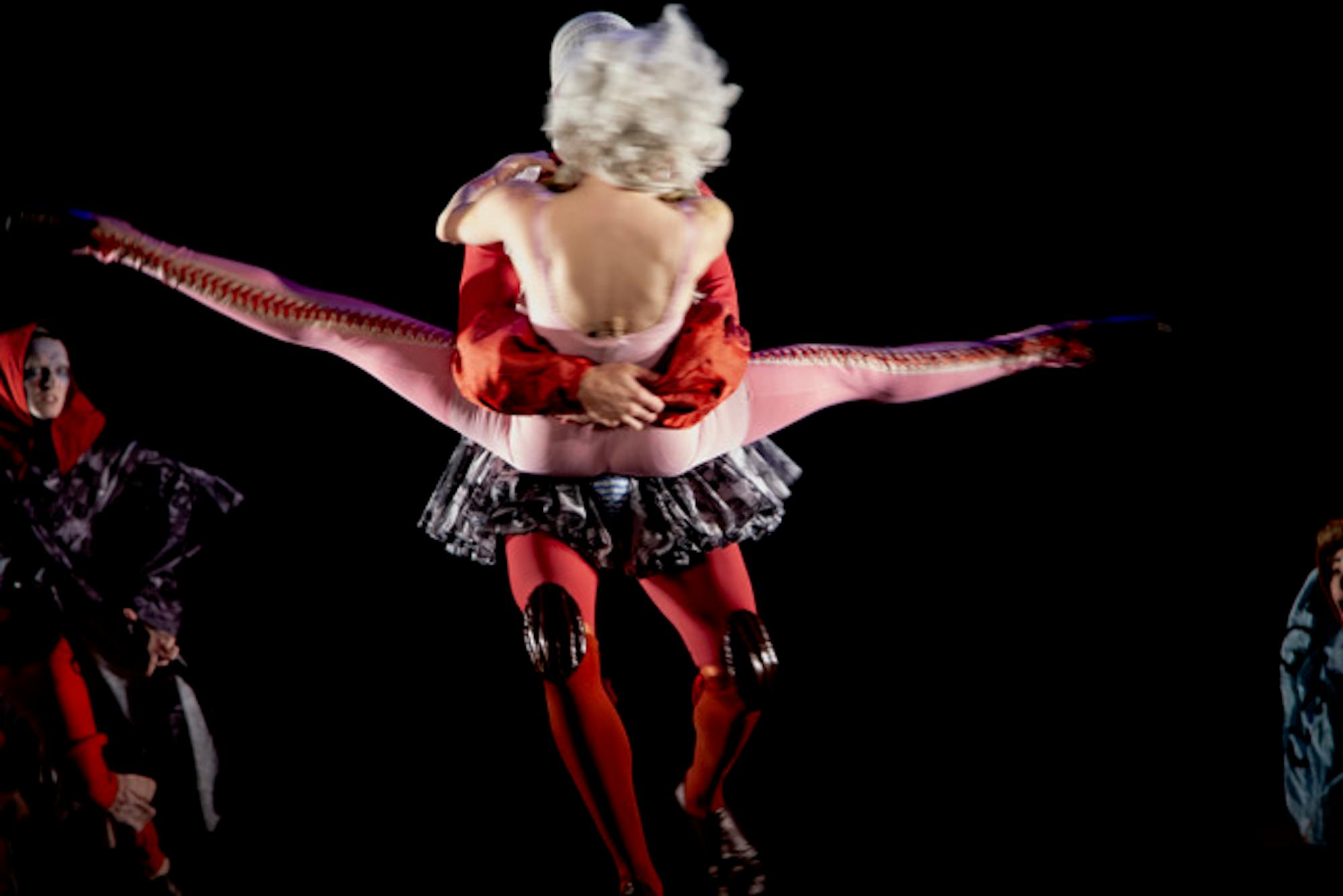
For music I work with my partner and lead actress composer Roman Ole and the pianist composer and also performer Roman Lemberg. We have worked together for the past 8 years. I usually hand over scripts and song lyrics to them. Moments for choreography and instrumental music are all noted in the scripts and they usually just take over.
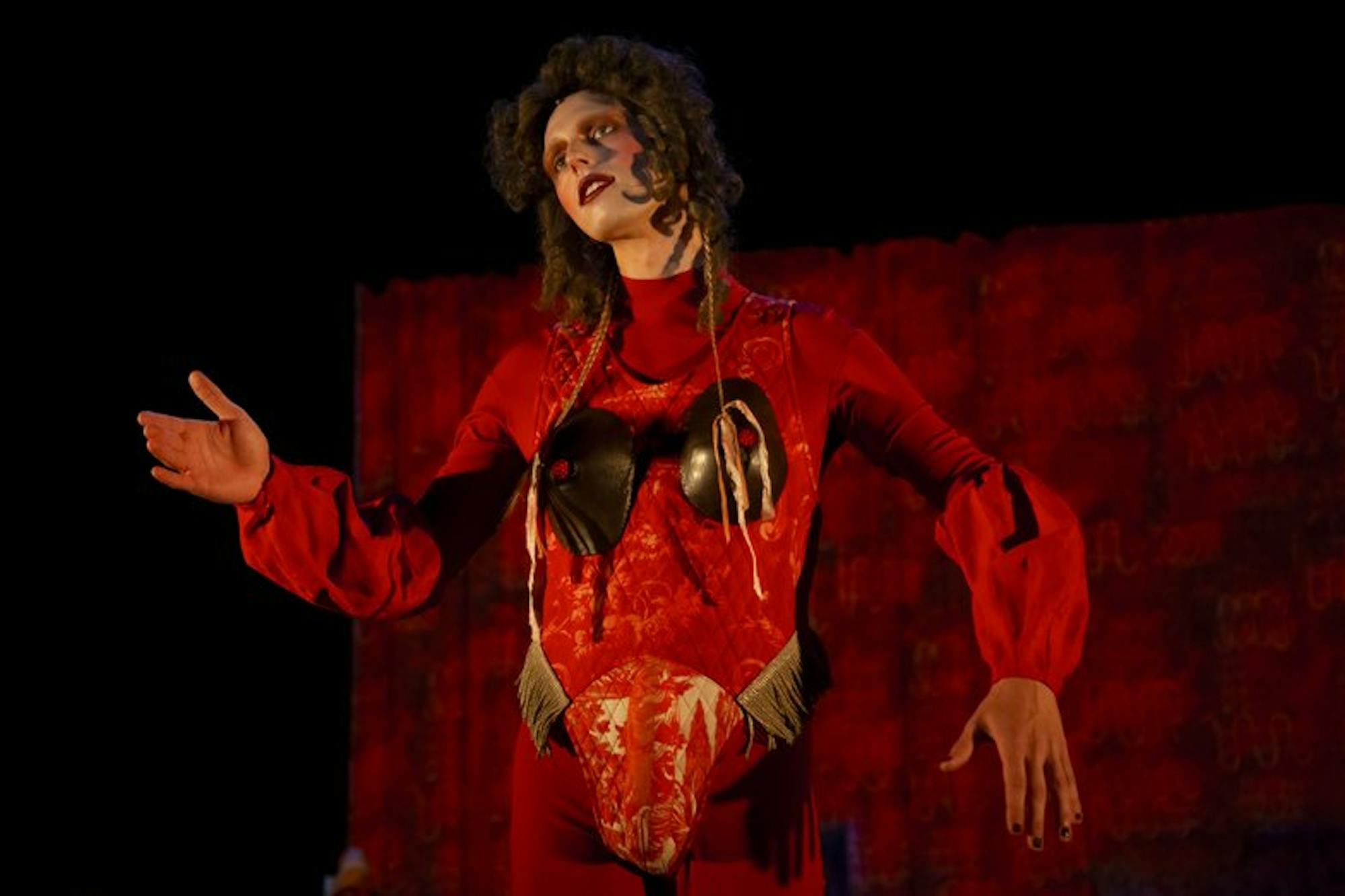
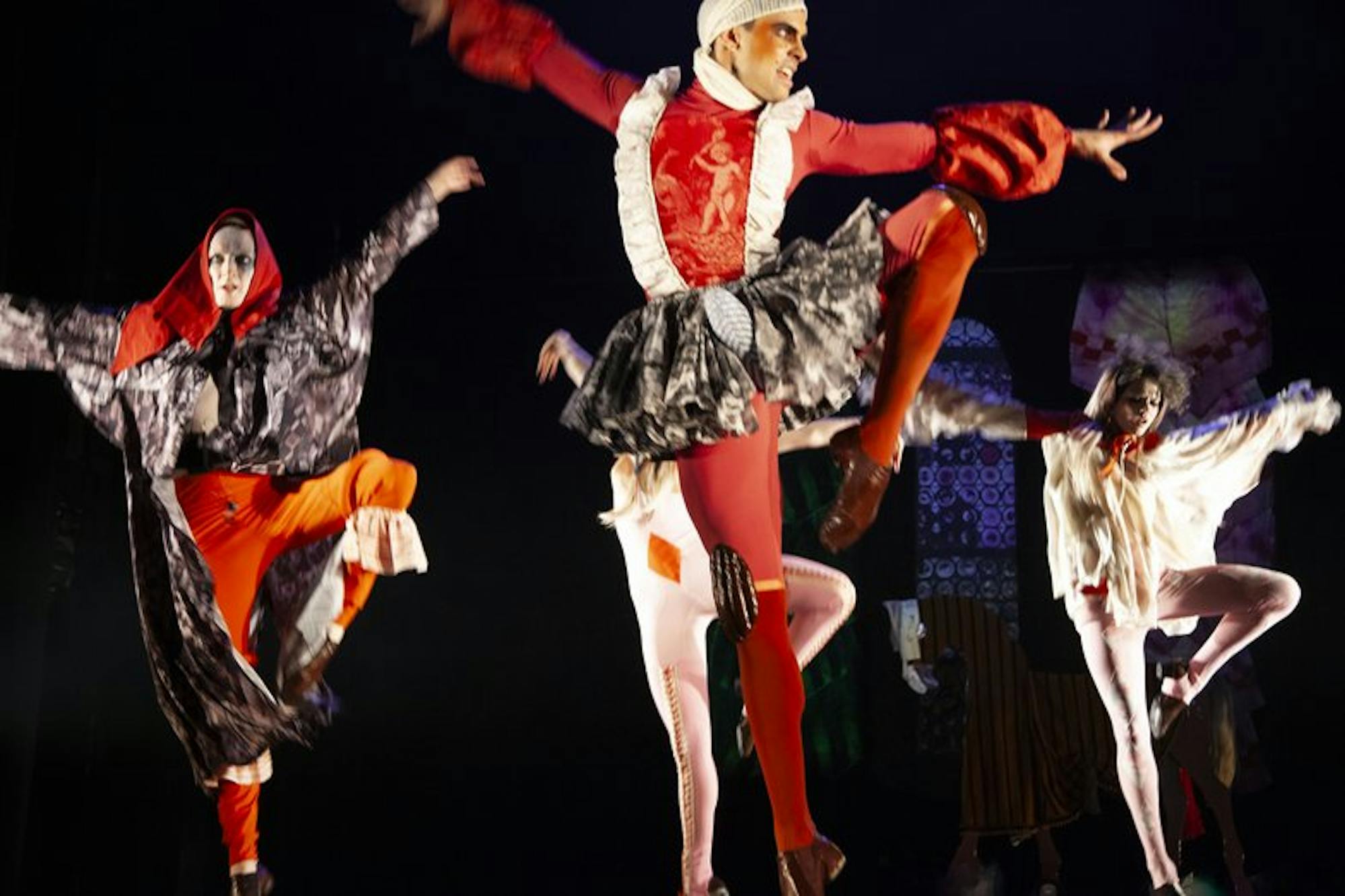
The elaborate costumes and set design in Gloriette stand out in particular.
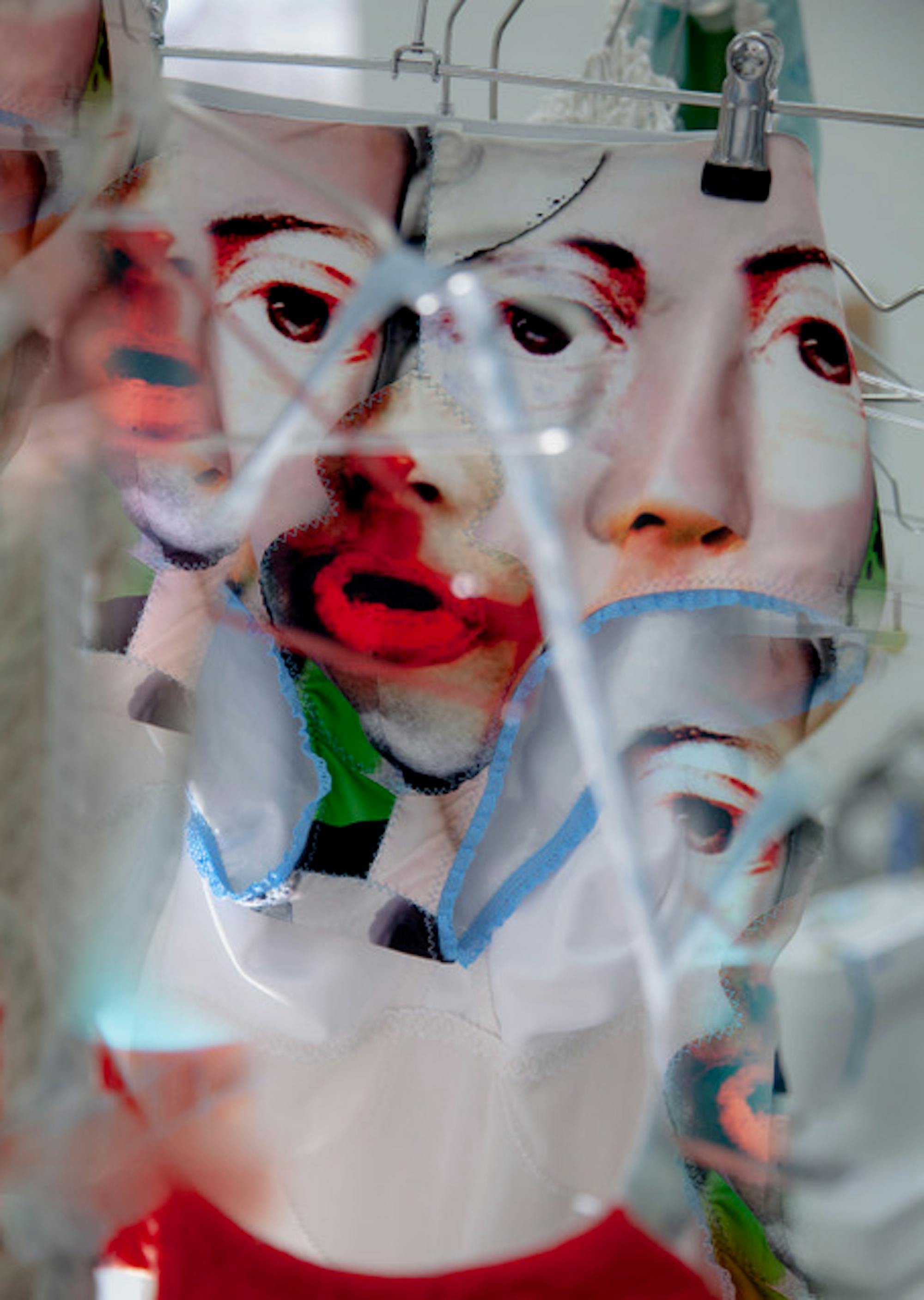
I begin each project by creating sketches, collages, and inspiration boards for every element—costumes, wigs, props, and set pieces. I also designing textiles and backdrops as well. The costumes and set components are built directly in the studio.
For larger set pieces, such as those in Gloriette, as well as the furniture in Female Remedy, I collaborated with artist and architect Niël Meyer. The smaller props and costumes were developed together with my long-time assistant, Elsa Leguévaques, who has worked with me for over eight years.
I usually make the sketches and she develops the patterns and does the tailoring and we both sew and make all the different elements of the pieces. For Gloriette we had a high number of costume changes so we had a few additional tailors helping with over 25 costumes.
You moved here from New York. How do you feel about Berlin as a city for artists right now?
I was born in Los Angeles. Left when I was 17. I have done some work in New York before I moved here but mainly my practice got going in Berlin and for that it has been monumental. I've built an audience here and it's great because the audience shifts and grows and it informs the directions I go.
Do you see yourself realizing future projects here?
There are many challenges rising for artists here. Rising rents, defunding, and censorship. It's definitely changing. But for now it's still has a spirit like no other and what I like most is the scene for performance is quite strong. There's a lot of cheesy stuff out there but the scene is unique to this city and it's busy.
Kemmler Foundation provided support for Leila Hekmat's work "Gloriette", which premiered in December 2024 at HAU, Berlin.